Deadlift Form: How to Deadlift With a Barbell, Trap Bar or Sumo
How to deadlift with good form: set up with the bar over your midfoot, keep it close, lift your hips and chest together and stand tall. Plus common mistakes and what a form check measures.
Published
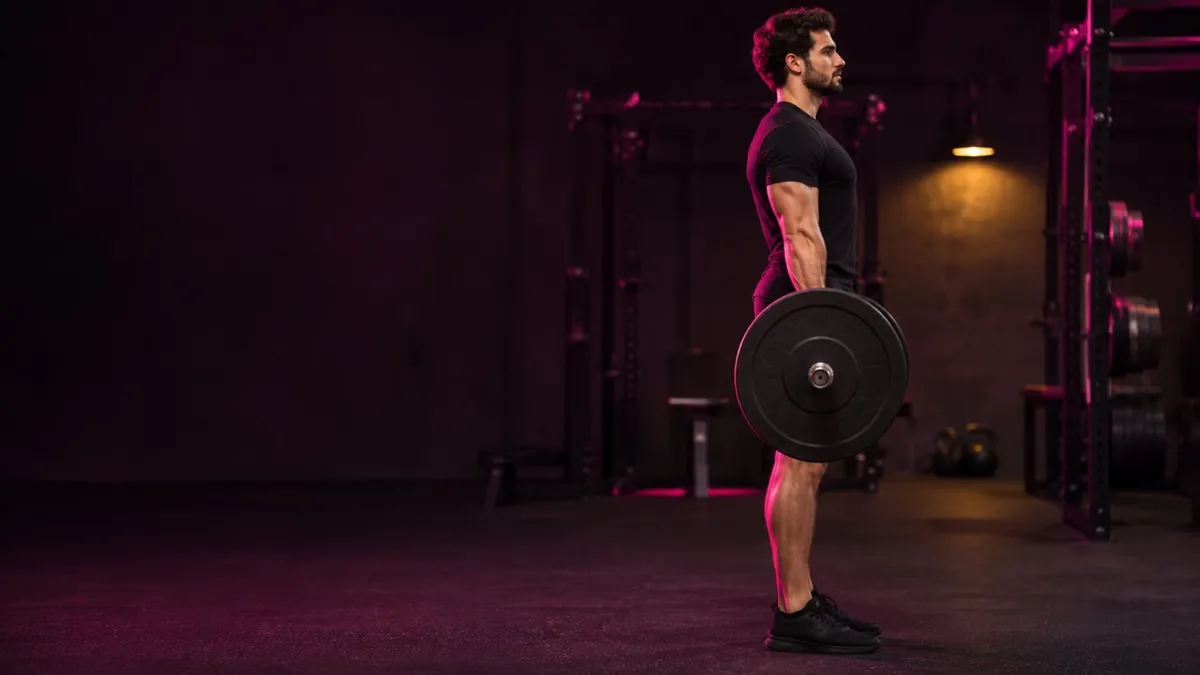
Good deadlift form comes down to five things: start with the bar over the middle of your feet, keep it close to your legs, lift your hips and chest together, stand all the way up, and lower it under control. Get those right on every rep and you have a deadlift that is safe to load up over time.
| At a glance | |
|---|---|
| Main muscles | Glutes, hamstrings, back muscles, quads, upper back and grip |
| Equipment | Barbell and plates, or a trap bar |
| Good for | Overall strength, hips and hamstrings, a stronger grip |
| Easiest version to learn | Trap bar deadlift, or a light barbell raised on blocks |
How to deadlift, step by step
These steps are for a conventional barbell deadlift. The trap bar and sumo versions follow the same pattern; the differences are further down.
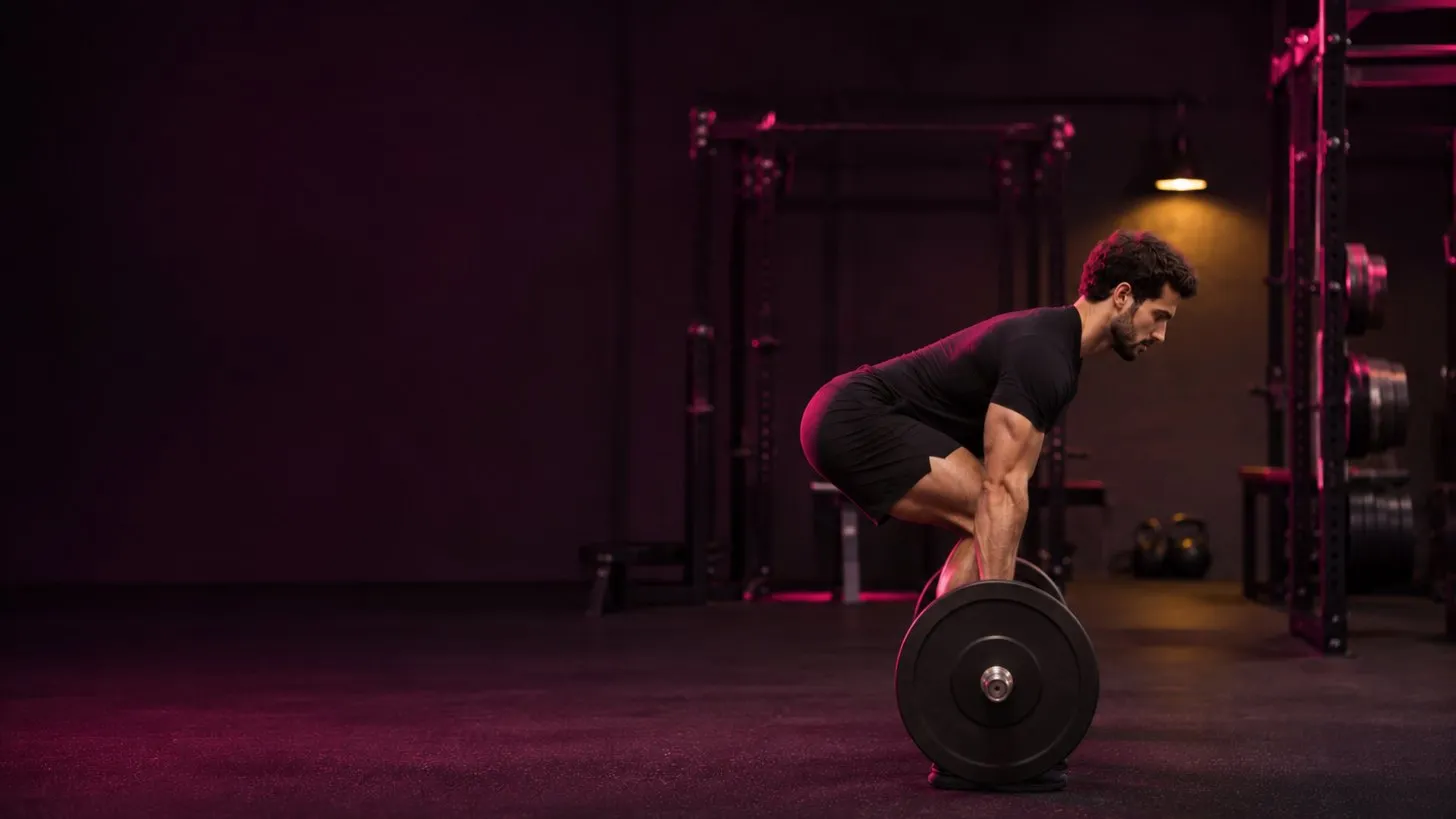
- Stand with the bar over the middle of your feet. Feet about hip-width apart, toes pointing forward or slightly out. From above, the bar should sit over your midfoot, about 2–3 cm from your shins.
- Grip the bar just outside your legs. Bend at the hips and knees to reach it, arms straight. Use a double overhand grip for as long as you can hold it.
- Bring your shins to the bar. Bend your knees until your shins touch the bar. Don’t let the bar roll forward as you do this.
- Set your back. Lift your chest a little, pull your shoulders down away from your ears and take the slack out of the bar, so you hear it click against the plates before it leaves the floor. Take a big breath and brace your stomach.
- Push the floor away. Drive through your whole foot. Your hips and shoulders should rise at the same rate, and the bar should drag up your shins and thighs.
- Stand tall. Finish with your hips and knees straight and your shoulders over the bar. Squeeze your glutes; don’t lean back.
- Lower it under control. Push your hips back first, keep the bar close, and bend your knees once it passes them. Set it down in the same spot, then reset for the next rep.
What good deadlift form looks like
Watch a good deadlift from the side and you’ll see the same things every rep:
- The bar moves in a straight vertical line, close to the legs from start to finish.
- The hips and shoulders rise together as the bar leaves the floor.
- The back stays in the same position from the floor to the top.
- At the top, the hips and knees are fully straight, with no lean back.
- The lowering is controlled, not dropped.
The last reps of a set are where form usually slips, so judge the whole set, not just the first rep.
Common deadlift mistakes and how to fix them
Your hips shoot up first
If your hips rise before your chest, your legs straighten early and your back ends up doing the lift. Cue: “push the floor away” and bring your chest and hips up together. Starting with your hips a little lower, or lowering the weight, often fixes it.
The bar drifts away from your legs
A bar that swings forward is harder to lift and pulls on your lower back. Cue: keep it brushing your shins and thighs all the way up. Starting with the bar over your midfoot and your shoulders pulled down keeps it close.
Your lower back rounds
Some rounding of the upper back is common on heavy pulls, but your lower back should stay in the same position throughout. Cue: take a big breath, brace and “pull the slack out” of the bar before it moves. If it still rounds, the weight is too heavy for now.
You don’t finish the lift
Stopping short, with your hips or knees still bent at the top, cuts the rep short. Cue: stand all the way up and squeeze your glutes. The opposite fault, leaning back at the top, adds nothing and loads your lower back.
You jerk the bar off the floor
Yanking the bar makes your back round and your hips shoot up. Take the slack out first, then build the pull smoothly.
You drop the bar on the way down
Letting it fall saves energy but misses half the training, and makes it hard to start the next rep in the right place. Lower it under control.
What Form Check measures on a deadlift
If you film a set in Trayner, Form Check scores every rep out of 100 and shows what to fix, with cues to try. On conventional, sumo and trap bar deadlifts it measures these from the video:
- Lockout: your hip and knee angles at the top, to check you stood all the way up.
- Hips rising early: whether your torso folds forwards as the bar leaves the floor, the sign that your hips shot up before your chest.
- Bar path: how far the bar drifts away from your body during the rep.
- Lowering speed: how long you take to lower the bar, so a dropped rep is flagged.
What it can’t measure is lower-back rounding. A phone video doesn’t show the spine clearly enough to put a number on it, so Trayner’s AI coach assesses it from the clip instead. Treat that part as a second opinion, and if you’re unsure, ask a coach to watch.
Form Check needs a side view of a deadlift. Filmed from the front, it can’t judge the bar path or your hips, so it falls back to an AI assessment without measurements.
How to film your deadlift
- Film from the side, square to the bar, with the phone at about hip height.
- Keep your whole body and both ends of the bar in frame from the start to the top.
- Stand the phone 2–3 metres away so nothing is cut off at lockout.
- Record the whole set, including the reset between reps.
Our guide on how to record yourself lifting covers lighting, angles and what to look for afterwards.
Conventional, sumo or trap bar?
| Conventional | Sumo | Trap bar | |
|---|---|---|---|
| Stance | Feet about hip-width, hands outside the legs | Wide stance, hands inside the knees | Feet hip-width, standing inside the bar |
| Torso | Most forward lean | More upright | More upright |
| Feels most like | A hip hinge | A cross between a squat and a hinge | A squat-like pull |
| Good for | Learning the standard lift | Lifters with long legs or limited hip hinge | Beginners and anyone who wants a gentler set-up |
The form checks are the same for all three: bar close, hips and chest rising together, full lockout and a controlled lowering.
If you want more hamstring work with less weight, the Romanian deadlift starts from the top and stops before the floor. It’s a good second hinge exercise for another day of the week, and the hip thrust trains the lockout with less work for your back.
How much should you deadlift?
Start lighter than you think, with a weight you can lift for 5–8 clean reps, and add weight in small steps while every rep still looks the same. Our guide on when to increase the weight explains how to decide.
To find your working weights from a recent set, use the 1RM calculator. It estimates your one-rep max from the weight and reps you lifted, so you can plan sets without testing a true max.
Is the deadlift bad for your back?
Not when the load suits you. Deadlifts train the muscles that support your back, and lifting with control through a full, comfortable range is how they get stronger. Problems tend to come from loads you can’t control yet, poor set-up or ignoring pain.
Some muscle soreness in your glutes, hamstrings or back a day or two later is normal. Sharp pain during the lift, pain that travels down a leg, numbness or pain that doesn’t settle are not. Stop deadlifting and see your GP or a physiotherapist.