How to Know When You're Ready to Increase the Weight
Finishing your target reps doesn't automatically mean it's time to add weight. Here's how to tell when you're actually ready to increase the load.

You finish your last set and every rep goes up.
So, do you add weight next time?
Maybe.
Completing the prescribed reps matters, but it’s only part of the decision. How those reps moved, how close you were to your limit and whether your technique stayed consistent can tell you much more.
The aim isn’t to add weight at every opportunity. It’s to add it when you’re ready for a slightly harder challenge.
Here’s what to look for.
1. You’re consistently completing your target reps
Start with the obvious one.
If your programme asks for 3 sets of 8 reps and you’re getting:
8, 8, 8
that’s a better case for increasing the load than:
8, 7, 5
But don’t judge it from one unusually good session.
If you’ve completed your target across several sessions, that’s stronger evidence that the current weight is becoming manageable.
For example:
- Week 1: 8, 7, 6
- Week 2: 8, 8, 7
- Week 3: 8, 8, 8
Now there’s a clear pattern.
You’ve earned the conversation about adding weight.
2. Your final reps are challenging, but still controlled
The last rep doesn’t need to look effortless.
If you’re strength training, some reps should feel difficult.
What you’re looking for is the difference between difficult and barely surviving the rep.
Imagine your target is 8 reps.
On rep eight, the bar slows down, but you maintain control and could probably perform another one or two reps if you absolutely had to.
That’s very different from rep eight taking everything you have while your technique changes dramatically just to finish it.
The first situation may suggest you’re ready to progress.
The second suggests the current weight is still providing plenty of challenge.
3. Your form isn’t changing just to finish the set
This is where simply counting reps can be misleading.
Technically, you completed all eight.
But what happened on reps seven and eight?
Perhaps your squat became noticeably shallower.
Maybe your hips started shifting.
Perhaps a dumbbell curl turned into a full-body swing.
The number in your training log still says 8 reps.
But those eight reps don’t necessarily tell the whole story.
Before increasing the weight, compare the beginning and end of your set.
Your final reps don’t need to look identical to your first, but they should still resemble the exercise you’re trying to perform.
If you’re repeatedly changing the movement just to reach the target number, adding more load probably isn’t the next thing to fix.
4. You have some reps left in reserve
You don’t need to take every set to complete failure before progressing.
A useful way of judging effort is reps in reserve, often shortened to RIR.
It simply asks:
How many more good reps could I have performed?
For example:
3 RIR — you probably had another three reps available.
2 RIR — perhaps another two.
1 RIR — maybe one more.
0 RIR — you don’t think another complete rep was possible.
This doesn’t need to be perfectly accurate. It’s an estimate.
But over time, it can help you distinguish between a weight that’s still very demanding and one you’re beginning to outgrow.
If your programme expects you to finish with roughly two reps in reserve and you’re consistently reaching the top of your rep range with considerably more left, that’s useful information.
It may be time to progress.
5. You’re not relying on one unusually good day
Some sessions just feel better.
You slept well. You ate properly. You’re focused. The gym isn’t busy. Everything moves.
Enjoy those sessions.
Just don’t automatically use one of them as proof that your working weight needs to increase.
Look for a pattern instead.
Your training history is more useful than a single workout.
If the same weight has become manageable across repeated sessions, you have a much stronger reason to move up.
6. You’re recovering well enough to progress
Progress isn’t only about what happens during the set.
Look at what happens afterwards too.
If you’re completing your training, recovering normally and arriving at the next session ready to perform again, progression may make sense.
But if every session is leaving you exhausted for days and your performance is getting worse, adding more weight because you managed the prescribed reps once probably isn’t the priority.
Training has to be recoverable if you want to keep progressing.
7. The smallest sensible increase is enough
Once you’ve decided to increase the load, you don’t need to make a dramatic jump.
Suppose you’ve been bench pressing 70 kg successfully.
Moving to 72.5 kg is progression.
You don’t need to jump straight to 80 kg simply because 70 kg went well.
The same applies to dumbbells and machines. Use the smallest practical increase available to you.
A small increase gives your body a new challenge without turning a manageable exercise into a completely different task.
What happens after you increase the weight?
Expect your reps to drop.
That’s normal.
Suppose you’ve worked up to:
70 kg — 3 × 10
You increase to 72.5 kg and manage:
10, 9, 8
That doesn’t mean the increase was a mistake.
You now have somewhere to progress again.
Over the following sessions, you might move towards:
10, 10, 8
then:
10, 10, 9
and eventually:
10, 10, 10
At that point, you can reassess.
This is one simple way progressive overload can work without forcing yourself to add weight every session.
When shouldn’t you increase the weight?
Hold the load where it is if you’re regularly:
- Missing your target reps
- Losing significant control towards the end of sets
- Shortening your range of motion just to complete reps
- Changing your technique substantially under load
- Struggling to recover between sessions
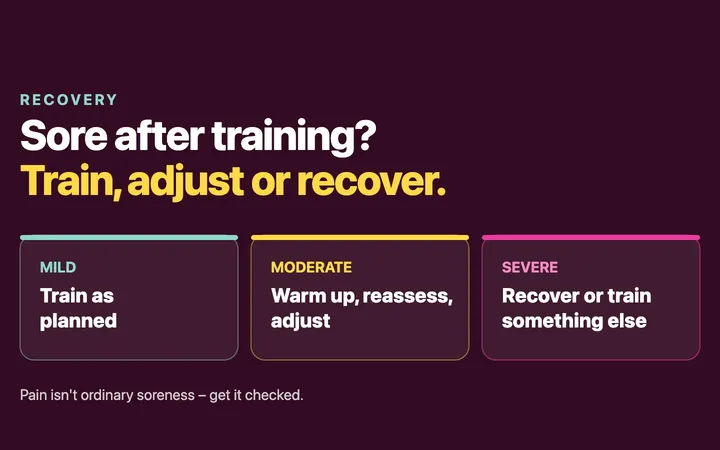
- Experiencing pain rather than normal muscular effort
Pain is particularly important.
Don’t treat pain as a sign that you need to push harder. If an exercise repeatedly causes pain or you’re concerned about an injury, stop and seek advice from an appropriately qualified healthcare professional.
Don’t let the number become the goal
Adding weight feels like progress because it’s easy to measure.
But the number on the bar isn’t the only thing that can improve.
You can progress by performing more reps with the same weight.
You can improve your control.
You can use a greater range of motion.
You can make your technique more consistent.
You can perform the same training with less perceived effort.
And then, when the evidence says you’re ready, you can add weight.
The question isn’t:
“Can I lift more?”
A more useful question is:
“Have I made this weight manageable enough that increasing it makes sense?”
That small difference can make your progression much more deliberate.
See the pattern, not just today’s workout
One workout can tell you how you performed today. Your training history tells you whether something is actually changing.
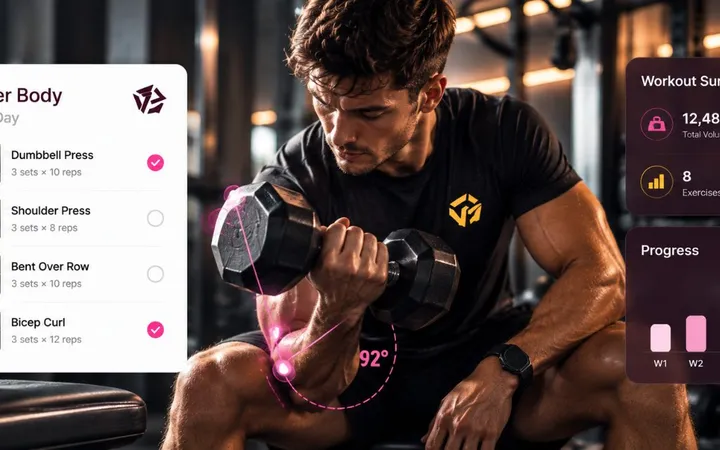
Trayner keeps your workouts, sets, reps and training context together so you can see your progress and make the next decision with more information.