Hip Thrust: How to Do It With Good Form (Barbell, Dumbbell and Machine)
How to do a hip thrust with good form: upper back on the bench, bar over your hips, drive through your heels and finish with a straight line from shoulders to knees. Plus common mistakes.
Published
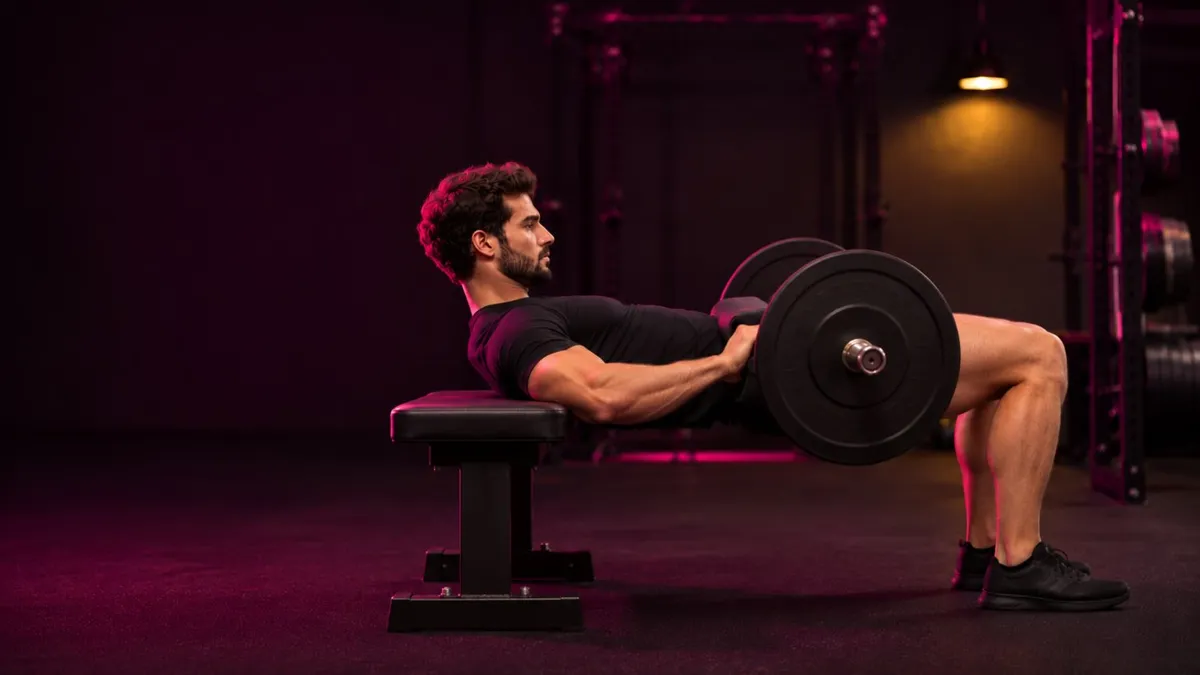
A good hip thrust has your upper back on the edge of a bench, the weight over your hips and your feet flat, so that at the top your shins are vertical and your body makes a straight line from shoulders to knees. Drive through your heels, squeeze your glutes to finish, pause, and lower under control.
| At a glance | |
|---|---|
| Main muscles | Glutes, with hamstrings, quads and core helping |
| Equipment | Bench and barbell with a pad, or a dumbbell, or a hip thrust machine |
| Good for | Glute strength and size, and a strong lockout in the deadlift |
| Easiest version to learn | Bodyweight glute bridge on the floor, then a dumbbell hip thrust |
How to do a hip thrust, step by step
These steps are for a barbell hip thrust. The dumbbell and machine versions follow the same pattern.
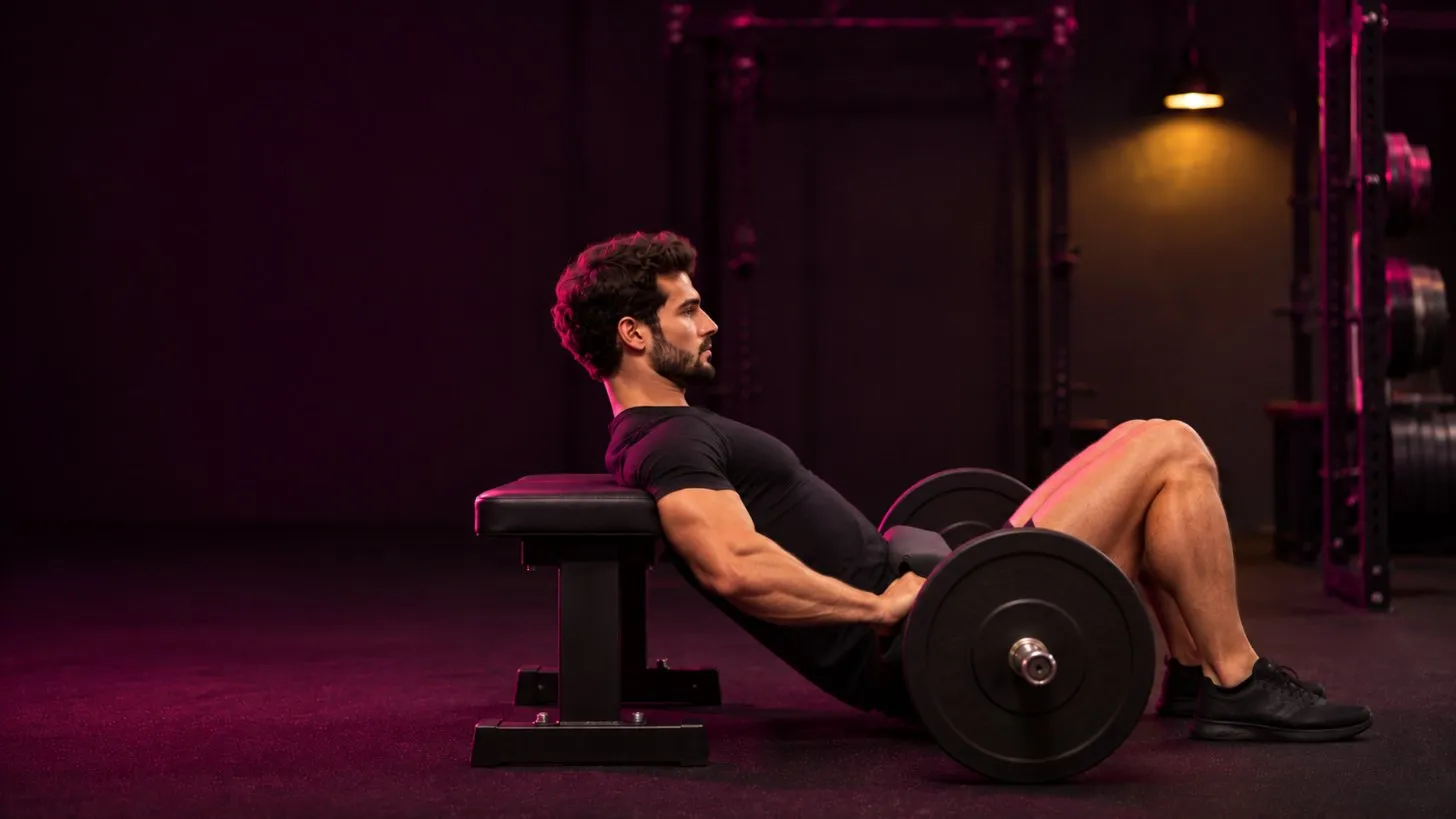
- Set up the bench. Use a bench about knee height that won’t slide. Sit on the floor with your back to its long edge, so the bottom of your shoulder blades rests on the edge.
- Roll the bar over your hips. Put a pad on the bar and roll it until it sits in the crease of your hips. Hold it with your hands just outside your hips.
- Place your feet. Feet flat, about hip-width apart, toes pointing forward or slightly out. Set them so that at the top of the rep your shins will be close to vertical.
- Brace. Tuck your chin slightly and keep your ribs down, as if you’re about to be nudged in the stomach.
- Drive up. Push through your heels and the middle of your feet and lift your hips. Your upper back pivots on the bench; your head and ribs move with it.
- Lock out. Stop when your body is in a straight line from shoulders to knees. Squeeze your glutes hard and hold for a second. Don’t arch your lower back to get higher.
- Lower under control. Lower your hips until they’re just above the floor, then start the next rep.
What good hip thrust form looks like
Watch a good hip thrust from the side and you’ll see:
- At the top, a straight line from shoulders through hips to knees, with the shins about vertical.
- The chin slightly tucked, so the head and ribs move with the torso rather than the head tipping back.
- Feet flat with the heels down from the first rep to the last.
- The same height at the top of every rep, with a short pause.
- A controlled lowering rather than the hips dropping.
Common hip thrust mistakes and how to fix them
You don’t reach full hip extension
Stopping short at the top leaves out the part where the glutes work hardest. Cue: drive until your hips are level with your shoulders and knees, then squeeze. If you can’t get there, the weight is too heavy.
You arch your lower back at the top
Pushing your ribs up and arching your back can make the hips look higher, but the extra height comes from your lower back, not your glutes. Cue: keep your ribs down and your chin tucked, and finish the rep with a glute squeeze instead.
Your feet are in the wrong place
Feet too far away and you’ll feel it mostly in your hamstrings; too close and your quads take over. Cue: at the top, your shins should be about vertical. Shuffle your feet until they are.
You push through your toes
Coming up onto your toes shifts the work to your quads. Cue: keep your heels down and push through them.
Your head tips back
Looking at the ceiling tends to make your back arch. Cue: look forwards, towards your knees, and keep your chin tucked as you rise.
You drop the weight
Letting your hips fall loses half the training. Lower under control and touch down lightly before the next rep.
What Form Check measures on a hip thrust
If you film a set in Trayner, Form Check scores every rep out of 100 and shows what to fix, with cues to try. On hip thrusts and glute bridges it measures these from the video:
- Lockout: your hip angle at the top, to check you reached full hip extension.
- Range of motion: how far your hips travel from the bottom of the rep to the top.
- Lowering speed: how long you take to lower, so dropped reps are flagged.
What it can’t measure is lower-back arching. On a side-on video, a glute lockout and an arched lower back can look the same, so Trayner’s AI coach assesses that from the clip instead. It also looks at your foot position and where your ribs and head are at the top, which need judgement rather than a single angle.
Form Check needs a side view of a hip thrust. Filmed from the front, it can’t measure the hip angle, so it falls back to an AI assessment without measurements.
How to film your hip thrust
- Film from the side, square to your body, with the phone at about bench height.
- Keep your whole body in frame, from your head to your feet, at the top of the rep.
- Stand the phone 2–3 metres away so nothing is cut off.
- Record the whole set, so you can see whether your top position changes on the last reps.
Our guide on how to record yourself lifting covers lighting, angles and what to look for afterwards.
Barbell, dumbbell, machine or glute bridge?
| Barbell hip thrust | Dumbbell hip thrust | Hip thrust machine | Glute bridge | |
|---|---|---|---|---|
| Set-up | Bench, bar and pad | Bench and one dumbbell over the hips | Machine with a back pad and belt | Floor only |
| Load | Easiest to load heavy | Light to moderate | Moderate to heavy, quick to change | Body weight, band or a light weight |
| Good for | Getting stronger over time | Learning the movement, training at home | Training without setting up a bar | Learning the movement, warming up |
The form checks are the same for all of them: feet placed so the shins are vertical at the top, a full lockout without arching, and a controlled lowering. Single-leg versions make bodyweight and light sets harder and show up differences between your sides.
How much should you hip thrust?
Start with a weight you can lift for 8–12 controlled reps with a pause at the top, and add weight in small steps while every rep still reaches a full lockout. Our guide on when to increase the weight explains how to decide.
The hip thrust works well alongside the deadlift: both train the glutes and hamstrings, but the hip thrust loads the top of the movement, the lockout, with much less work for your back.
Is the hip thrust safe for your back and knees?
For most people, yes. Your back is supported on the bench and stays in a neutral position, and your knees bend to a comfortable angle without much load on them. Problems usually come from arching the lower back at the top or using more weight than you can lock out.
If the bar presses painfully on your hips, use a thicker pad. Pain in your lower back or knees during the lift, or pain that doesn’t settle afterwards, is a reason to stop and see your GP or a physiotherapist.