Seated Cable Row: How to Do It With Good Form
How to do a seated cable row with good form: sit tall, pull the handle to your stomach with your elbows close, squeeze your shoulder blades, and let your arms reach forward again under control.
Published
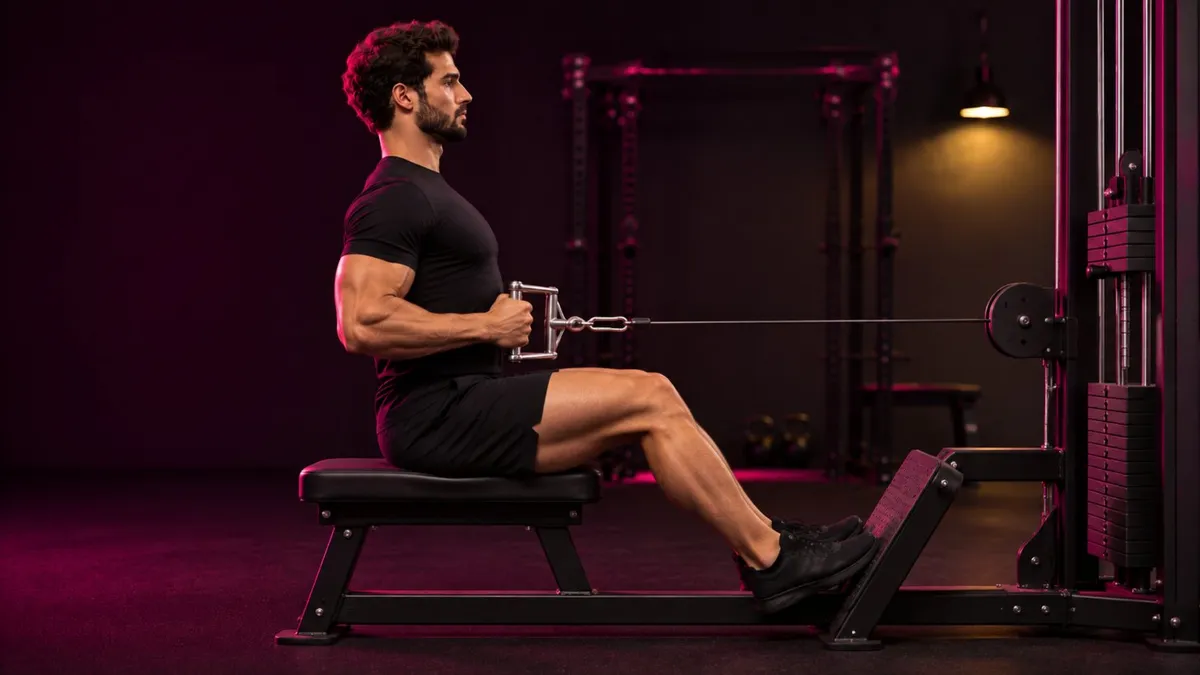
A good seated cable row has you sitting tall with your feet braced and a slight bend in your knees. Pull the handle to your stomach with your elbows close to your sides, squeeze your shoulder blades together, then let your arms reach forward again under control, without rocking your body to move the weight.
| At a glance | |
|---|---|
| Main muscles | Lats and upper back, with rear shoulders, biceps and forearms helping |
| Equipment | A low cable pulley with a V handle, or a seated row machine |
| Good for | Back strength, posture, balancing all the pressing you do |
| Easiest version to learn | Seated row machine with a chest pad |
How to do a seated cable row, step by step
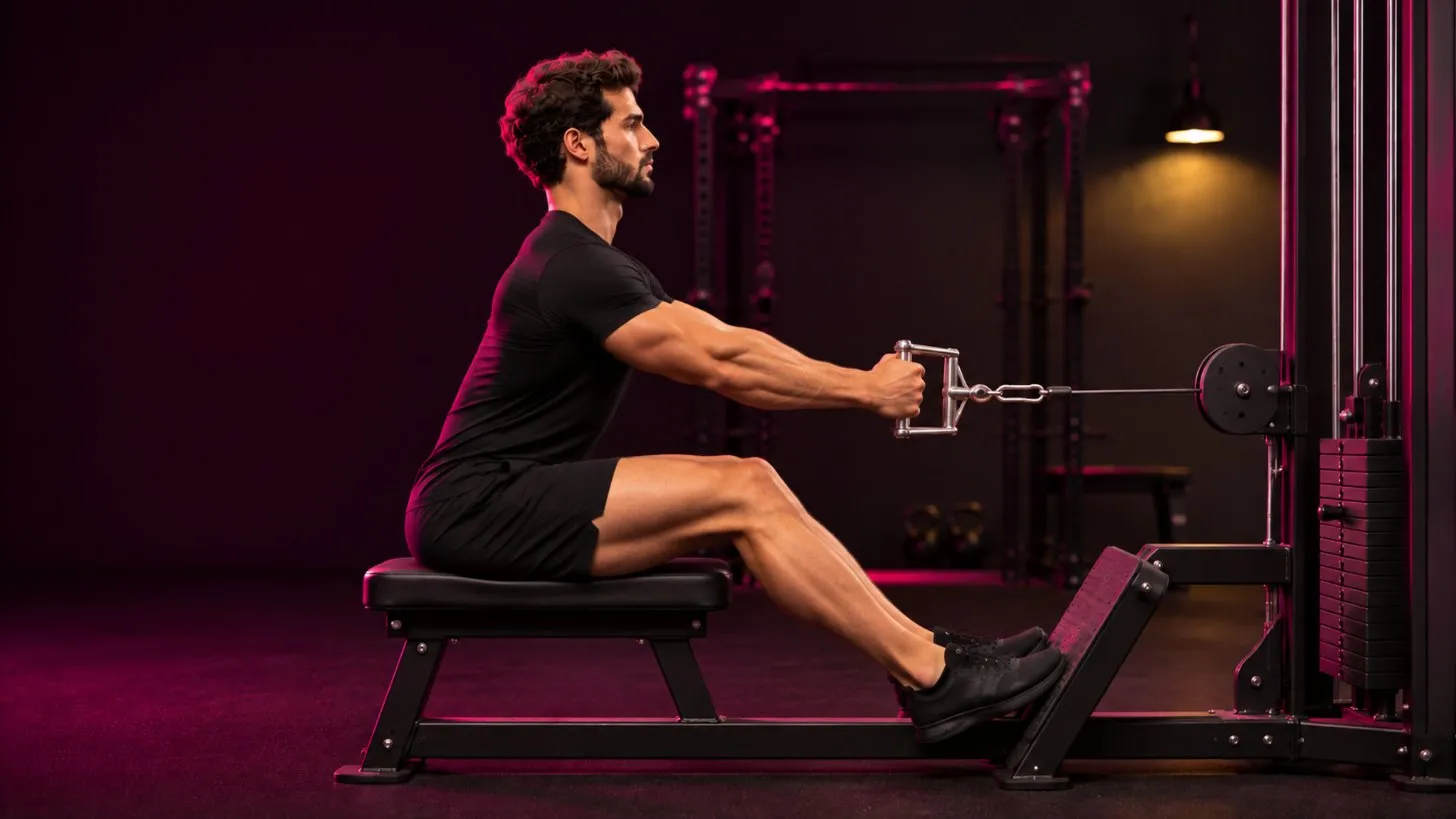
- Set up. Attach a V handle to the low pulley. Sit on the bench and put your feet on the footplate with your knees slightly bent.
- Take the handle. Reach forward, grip the handle and sit back until your back is straight and your arms are straight in front of you, with the weight lifted off the stack.
- Sit tall. Chest up, shoulders down away from your ears, stomach braced. A slight forward lean from the hips at the start is fine.
- Pull. Drive your elbows back close to your sides and pull the handle towards your lower ribs or upper stomach. Your torso finishes upright, not leaning back.
- Squeeze. Pause for a moment with the handle at your stomach and your shoulder blades pulled together.
- Return under control. Let your arms straighten and your shoulders reach forward slowly, until you feel a stretch across your back. Then pull again.
What good seated row form looks like
Watch a good seated row from the side and you’ll see:
- The torso stays tall and almost still; any lean is small and the same every rep.
- The handle comes all the way to the stomach on every rep.
- The arms straighten fully at the front, with the shoulders reaching forward slightly.
- The elbows travel back close to the body.
- The weight never slams back onto the stack between reps.
Common seated row mistakes and how to fix them
Rocking your body to move the weight
Swinging your torso back to start each rep is the most common seated row mistake. It turns a back exercise into a body swing. Cue: sit tall, brace and keep your torso still while your arms and shoulder blades do the work. If you can’t, lower the weight.
Not pulling all the way in
Stopping with the handle well short of your body leaves out the squeeze, the part that works your upper back hardest. Cue: bring the handle to your stomach and pause there.
Cutting the stretch short
Starting the next pull before your arms are straight shortens the rep. Cue: let your arms straighten and your shoulders reach forward at the front of every rep, while your back stays straight.
Shrugging your shoulders
Lifting your shoulders towards your ears as you pull shifts the work to your neck. Cue: shoulders down, then elbows back.
Rounding your back at the front
Reaching forward is fine; folding your lower back to do it is not. Cue: lean from the hips with your chest up, and only as far as your back stays straight.
Letting the weight snap back
Letting the stack pull your arms forward fast loses half the rep and jerks your shoulders. Control the return.
What Form Check measures on a seated row
If you film a set in Trayner, Form Check scores every rep out of 100 and shows what to fix, with cues to try. On seated cable and machine rows it measures these from the video:
- Torso rocking: how much your torso swings back and forth to move the weight.
- The pull: how far your elbows bend, to check you pulled all the way in.
- The stretch: whether your arms straighten fully at the front.
- Return speed: how long you take to let the weight back, so a snapped return is flagged.
What it can’t measure is how well you squeeze your shoulder blades together, or differences between your left and right sides. Those need more than a single camera angle, so Trayner’s AI coach assesses them from the clip instead.
These checks are for seated rows with your torso upright. A bent-over barbell row is a different movement and isn’t measured this way.
How to film your seated row
- Film from the side, or from behind at an angle, with the phone at about shoulder height when seated.
- Keep your whole upper body, arms and the handle in frame, from the stretch at the front to the squeeze at the end.
- Put the phone 2–3 metres away, so your arms aren’t cut off when they reach forward.
- Record the whole set, so you can see when you start rocking.
Our guide on how to record yourself lifting covers lighting, angles and what to look for afterwards.
Which handle should you use?
| Close-grip V handle | Wide bar | Rope or single handles | |
|---|---|---|---|
| Grip | Palms facing each other | Overhand, wider than shoulders | Palms facing each other, free to turn |
| Feels most in | Lats and mid back | Upper back and rear shoulders | Mid back, easy on the wrists |
| Good for | Learning the row and loading it heavier | Upper-back and posture work | Anyone whose wrists or elbows don’t like a fixed grip |
The form checks are the same whichever handle you use: torso still, full pull, full stretch and a controlled return.
How heavy should you row?
Start with a weight you can row for 10–12 reps with a pause at your stomach on every one, and add weight in small steps while your torso stays still. Our guide on when to increase the weight explains how to decide.
Rows balance pressing exercises such as the bench press and push-up, and they build the back strength that helps with the pull-up. A simple rule is to do at least as many sets of rows as you do of presses.
Is the seated row safe for your lower back?
For most people, yes. Your back stays straight and you’re sitting down, so the load on it is modest. Problems usually come from rounding your lower back to reach forward, or rocking hard to heave a weight that’s too heavy.
Some soreness in your back and arms a day or two later is normal. Pain in your lower back, shoulder or elbow during the lift, or pain that doesn’t settle, is a reason to stop and see your GP or a physiotherapist.