Pull-Up: How to Do a Pull-Up With Good Form (and Get Your First One)
How to do a pull-up with good form: start from a dead hang, pull your chest towards the bar until your chin clears it, and lower all the way under control. Plus how to build up to your first pull-up.
Published
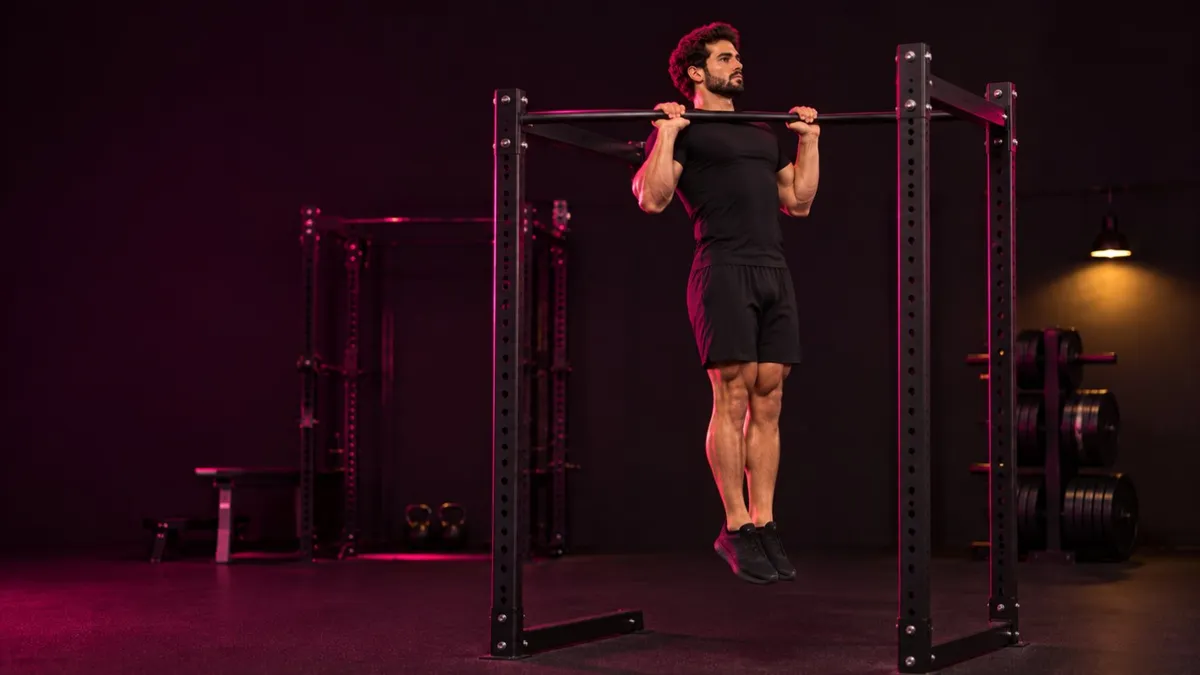
A good pull-up starts from a dead hang with your arms straight, pulls your chest up towards the bar until your chin clears it, and lowers all the way back to straight arms under control, without swinging. If you can’t do one yet, negatives, assisted pull-ups and rows will get you there.
| At a glance | |
|---|---|
| Main muscles | Lats and upper back, with biceps, forearms and core helping |
| Equipment | A pull-up bar; a band or an assisted pull-up machine while you build up |
| Good for | Upper-body pulling strength, a wider-looking back, grip |
| Easiest version to learn | Assisted pull-up (machine or band), or slow negatives |
How to do a pull-up, step by step
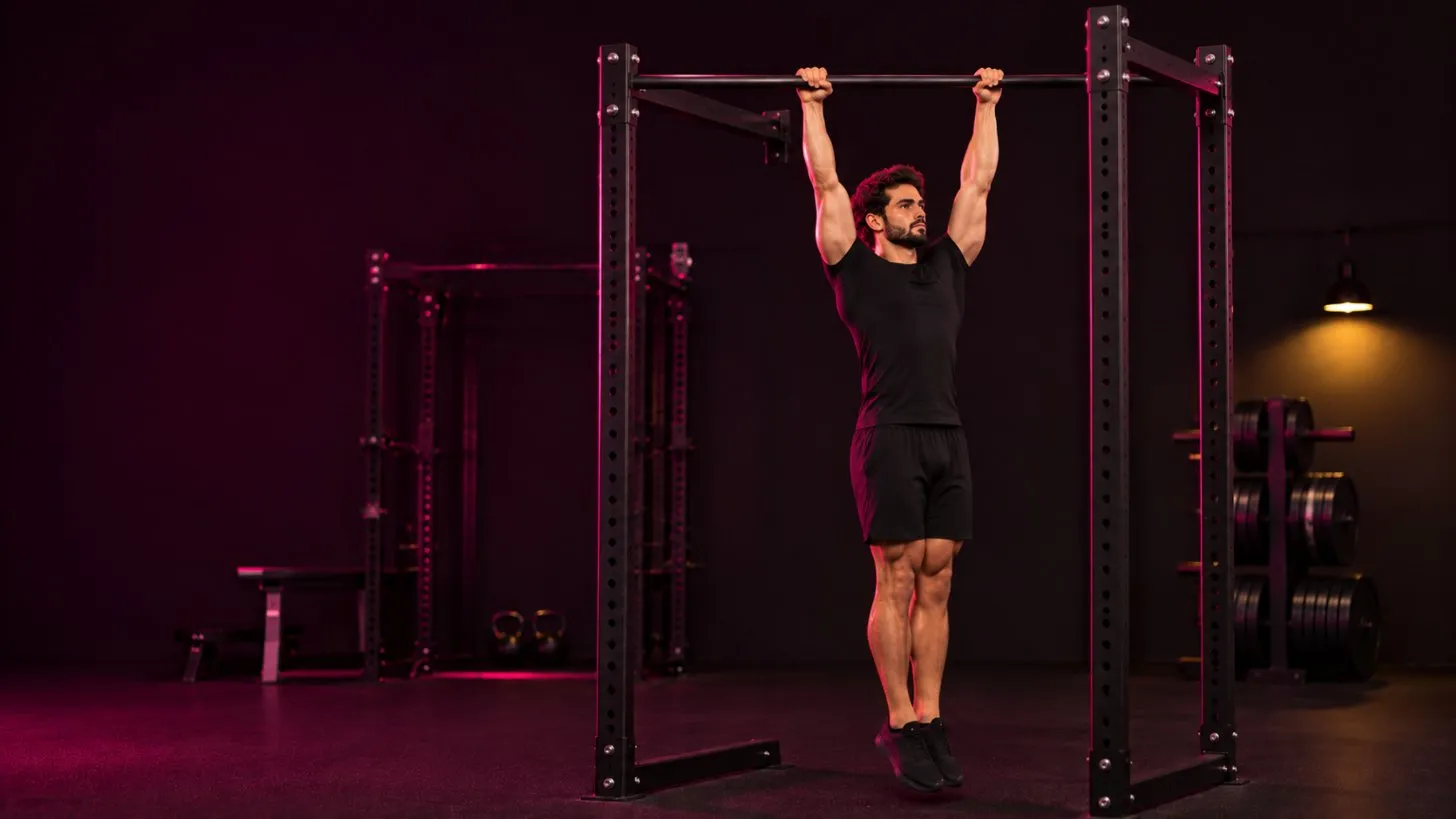
- Grip the bar. Overhand grip (palms facing away), hands a little wider than your shoulders. Wrap your thumbs around the bar.
- Start from a dead hang. Arms straight, legs straight or crossed at the ankles, body still. Squeeze your glutes and brace your stomach so you don’t swing.
- Set your shoulders. Pull your shoulders down slightly, away from your ears, before your elbows bend.
- Pull. Drive your elbows down towards your back pockets and lift your chest towards the bar.
- Finish the rep. Keep pulling until your chin is clearly over the bar. Don’t crane your neck to reach it.
- Lower under control. Take two or three seconds to lower until your arms are straight again. That’s one rep.
What good pull-up form looks like
Watch a good pull-up and you’ll see:
- Every rep starts from straight arms and finishes with the chin over the bar.
- The body stays still, without swinging, kicking or kipping.
- The shoulders stay down, away from the ears, at the top.
- The lowering takes about as long as the pull, or longer.
- The last reps look like the first ones. If they don’t, the set should end.
Common pull-up mistakes and how to fix them
Half reps at the top
Stopping with your chin below the bar leaves out the hardest part. Cue: pull your chest towards the bar, not just your chin. If you can’t get your chin over, use assistance for the last reps instead of cutting them short.
Not lowering all the way
Starting the next rep with your elbows still bent shortens the range and makes your numbers look better than they are. Cue: straighten your arms fully at the bottom of every rep.
Swinging or kipping
Using your legs and hips to swing up moves the work away from your back. Cue: squeeze your glutes, keep your legs still and pause for a moment at the bottom.
Shrugging at the top
Letting your shoulders ride up to your ears at the top puts them in a weak position. Cue: think “shoulders down, chest up” as you finish the pull.
Craning your neck
Reaching your chin up over the bar makes a short rep look complete. Keep your head in line with your body and let your chest come up instead.
Dropping on the way down
Falling from the top wastes half of each rep, and controlled lowering is one of the best ways to build up to more reps. Lower under control.
How to do your first pull-up
If you can’t do a pull-up yet, work through these steps two or three times a week. Move on when the current step feels solid.
- Dead hang. Hang from the bar with straight arms for 20–30 seconds. This builds grip and gets your shoulders used to hanging.
- Scapular pull-ups. From a dead hang, pull your shoulders down and lift yourself an inch without bending your elbows. 3 sets of 8–10.
- Rows and pulldowns. Inverted rows under a bar, seated cable rows and lat pulldowns build the same muscles with less than your body weight.
- Assisted pull-ups. Use a band looped over the bar or an assisted pull-up machine, and reduce the help as you get stronger.
- Negatives. Jump or step up so your chin is over the bar, then lower yourself over 3–5 seconds. 3 sets of 3–5.
- Your first rep. Try a strict rep at the start of a session, when you’re fresh. Then add one rep at a time.
What Form Check measures on a pull-up
If you film a set in Trayner, Form Check scores every rep out of 100 and shows what to fix, with cues to try. On pull-ups and chin-ups it measures these from the video:
- Range at the top: how far your elbows bend, which shows how high you pulled.
- Dead hang: whether your arms straighten fully at the bottom of each rep.
- Swing: whether your body swings or kips to help you up.
- Lowering speed: how long you take to lower, so dropped reps are flagged.
It doesn’t measure whether your chin clears the bar directly, because a face turned away from the camera can’t be tracked reliably; the elbow bend is a more honest signal. Differences between your left and right sides need a front view and are assessed by Trayner’s AI coach rather than measured.
How to film your pull-up
- Side, front or back all work for the measured checks. A side view is the best all-rounder.
- Keep your whole body and the bar in frame, from your hands at the top to your feet at the bottom.
- Put the phone 2–3 metres away, raised if you can, so your hands aren’t cut off at the top.
- Record the whole set, so you can see when the reps start to shorten.
Our guide on how to record yourself lifting covers lighting, angles and what to look for afterwards.
Pull-up, chin-up or lat pulldown?
| Pull-up | Chin-up | Lat pulldown | |
|---|---|---|---|
| Grip | Overhand, a little wider than shoulders | Underhand, about shoulder-width | Overhand or neutral, on a cable bar |
| Feels | Hardest of the three | A little easier, more biceps | Easiest to adjust: pick any weight |
| Good for | Back strength with your own body weight | Getting your first reps, more arm work | Beginners, and adding volume after pull-ups |
The form checks are the same for all of them: start from straight arms, pull until your elbows are fully bent, keep your body still and lower under control.
How many pull-ups should you do?
Once you can do several strict reps, 3 sets of as many clean reps as you can, stopping one or two short of failure, works well. When you can do 10–12, add weight with a belt or a dumbbell between your feet, or slow the lowering down. Our guide on when to increase the weight explains how to decide.
Are pull-ups bad for your shoulders?
Not for most people. Hanging and pulling through a full range is how your shoulders and back get stronger. Problems tend to come from too many reps too soon, swinging hard, or pulling with your shoulders shrugged up to your ears.
Some soreness in your back and arms a day or two later is normal, especially at first. Sharp pain in your shoulder or elbow, pain that travels down your arm, or pain that doesn’t settle is a reason to stop and see your GP or a physiotherapist.