Incline Bench Press: How to Do It With Good Form (Barbell and Dumbbell)
How to do an incline bench press with good form: set the bench to about 30 degrees, lower the bar to your upper chest with your elbows tucked, and press back up to straight arms over your shoulders.
Published
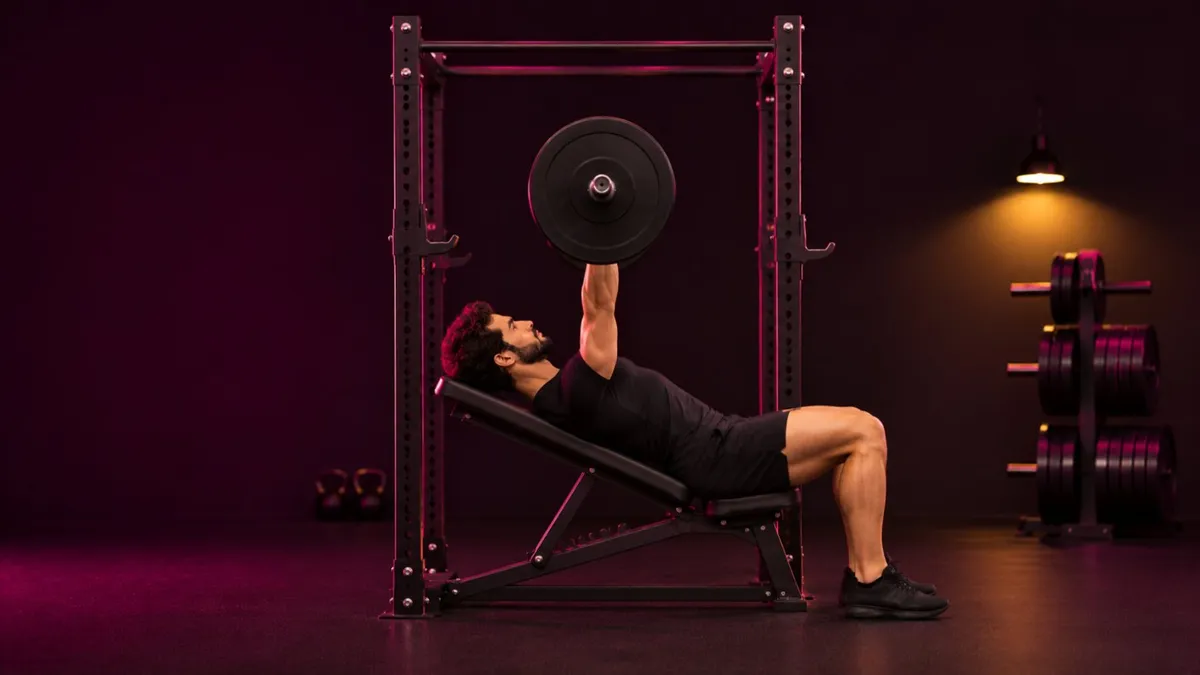
A good incline bench press starts with the bench at about 30 degrees, your shoulder blades pulled back and your feet flat. Lower the bar under control to your upper chest with your elbows tucked a little, then press back up until your arms are straight and the bar is over your shoulders.
| At a glance | |
|---|---|
| Main muscles | Chest, especially the upper chest, with front shoulders and triceps |
| Equipment | Adjustable bench with a barbell and rack, dumbbells, or a Smith machine |
| Good for | Upper chest and shoulder strength, a second press after the flat bench |
| Easiest version to learn | Dumbbell incline press with light dumbbells |
How to do an incline bench press, step by step
These steps are for a barbell incline bench press in a rack. The dumbbell and Smith machine versions follow the same pattern.
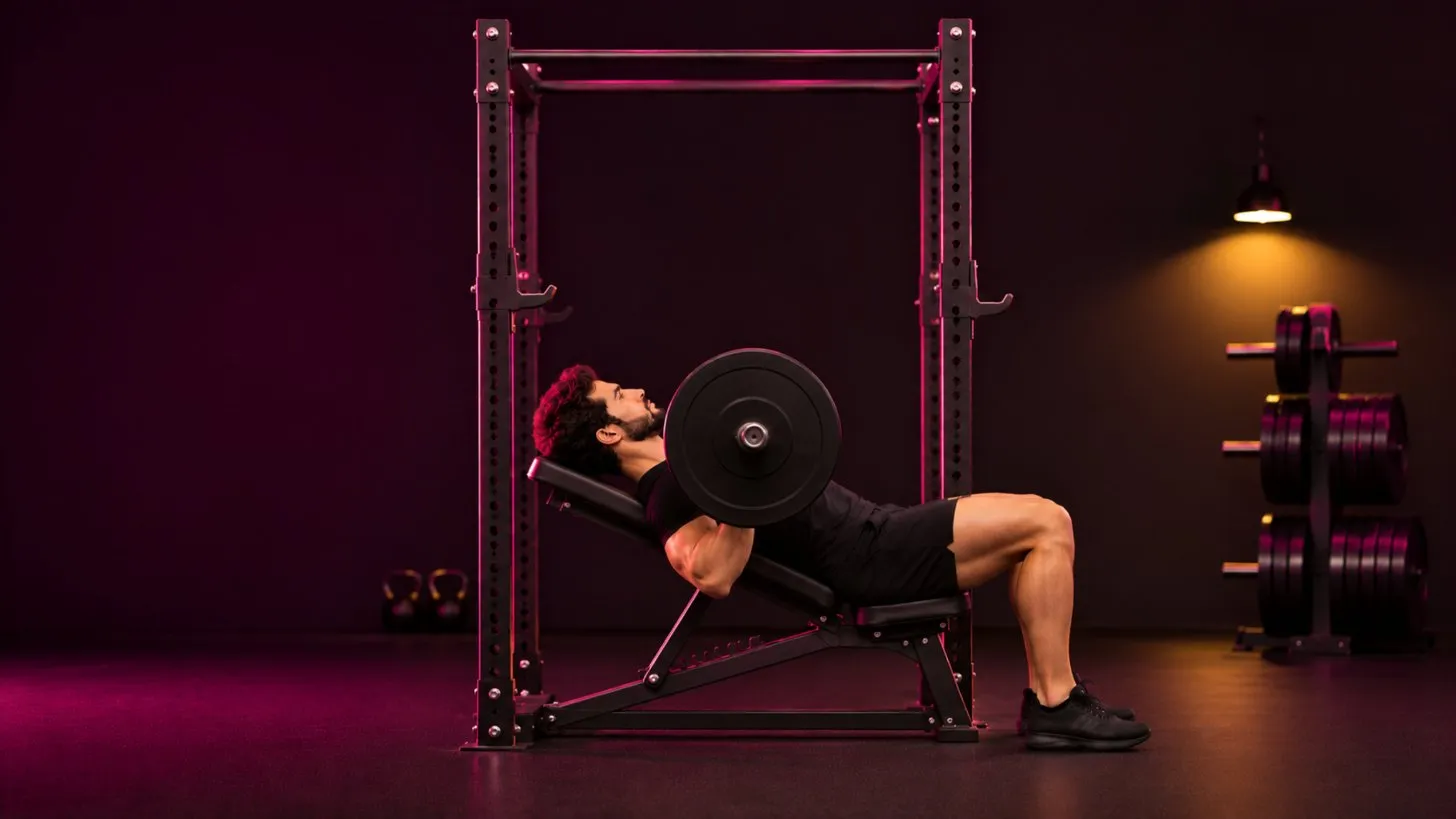
- Set the bench. Adjust it to about 30 degrees. Set the rack hooks so you can unrack the bar with your arms almost straight.
- Lie back and set your shoulders. Sit with your bottom on the seat and your eyes roughly under the bar. Pull your shoulder blades back and down into the bench, keeping your chest up.
- Grip the bar. Hands a little wider than your shoulders, wrists straight and stacked over your elbows. Wrap your thumbs around the bar.
- Plant your feet. Feet flat on the floor and a little wider than your hips, so you feel stable.
- Unrack and position the bar. Lift it out and move it so it’s over your shoulders, arms straight.
- Lower to your upper chest. Take two or three seconds to lower the bar to the top of your chest, just below your collarbones. Keep your elbows slightly tucked, not flared straight out to the sides.
- Press. Push the bar back up and slightly back, so it finishes over your shoulders with your arms straight. Keep your shoulder blades pinned and your bottom on the seat.
What good incline bench form looks like
Watch a good incline press from the side and you’ll see:
- The bar touches the same spot on the upper chest every rep.
- At the bottom, the forearms are close to vertical, under the bar.
- The elbows sit at roughly 45–70 degrees from the body, not out at 90.
- At the top, the arms are straight and the bar is stacked over the shoulders.
- The bottom stays on the seat and the feet stay planted.
Common incline bench mistakes and how to fix them
Not touching your chest
Stopping a few inches above your chest shortens the rep and leaves out the stretch. Cue: lower until the bar lightly touches your upper chest. If you can’t, lower the weight.
Not locking out
Stopping short at the top on every rep cuts the range at the other end. Cue: press until your elbows are straight and the bar is over your shoulders.
Elbows flared straight out
Elbows at 90 degrees to your body puts more stress on your shoulders. Cue: tuck your elbows slightly, so your upper arms make an arrow shape with your body rather than a T.
The bar drifts towards your face or stomach
Lowering to your neck or to the bottom of your chest changes the movement and makes it harder to control. Cue: aim for just below your collarbones and keep the bar path the same every rep.
Bench set too steep
Above about 45 degrees, an incline press turns into a shoulder press. Cue: drop the bench to about 30 degrees.
Lifting your bottom off the seat
Pushing your hips up flattens the incline and turns it into a flat press. Cue: keep your bottom on the seat and drive through your feet without lifting.
What Form Check measures on an incline bench press
If you film a set in Trayner, Form Check scores every rep out of 100 and shows what to fix, with cues to try. On the barbell, Smith machine and dumbbell incline press it measures these from the video:
- Range at the bottom: how far your elbows bend, to check the bar or dumbbells come down to your chest.
- Lockout: whether your arms straighten at the top.
- Bar path: how much the bar drifts forwards and back during the rep.
- Elbow flare: the angle between your upper arm and your body at the bottom.
- Lowering speed: how long you take to lower, so dropped reps are flagged.
Where the bar touches your chest and the steeper path of an incline press are assessed by Trayner’s AI coach from the clip rather than measured, as are differences between your left and right sides, which need a front view.
How to film your incline bench press
- Film from the side, with the phone at about bench height and level with your chest.
- Keep your whole upper body, arms and the bar in frame, including your hands at lockout.
- Put the phone 2–3 metres away, so nothing is cut off at the top.
- Record the whole set, so you can see whether the touch point or lockout changes on the last reps.
Our guide on how to record yourself lifting covers lighting, angles and what to look for afterwards.
Barbell, dumbbell or Smith machine?
| Barbell | Dumbbells | Smith machine | |
|---|---|---|---|
| Set-up | Rack, bar and adjustable bench | Adjustable bench and a pair of dumbbells | Machine bar on fixed rails |
| Feels | Most stable for heavy weights | Each arm works alone; a deeper stretch | Bar path set by the machine |
| Good for | Getting stronger in small steps | Balance between sides, sore wrists or shoulders | Training alone without a spotter |
The form checks are the same for all three: lower to the upper chest, keep the elbows slightly tucked, lock out over the shoulders and lower under control.
For the flat version, our guide to bench press form covers the seven things to check on every rep.
How heavy should you incline press?
Most people press less on an incline than on a flat bench. Start with a weight you can lift for 8–10 controlled reps that touch your upper chest and lock out, and add weight in small steps while every rep looks the same. Our guide on when to increase the weight explains how to decide, and the 1RM calculator estimates your one-rep max from any set.
Train alone with a barbell only in a rack with safety arms set just below your chest, or use dumbbells or a Smith machine.
Is the incline bench press bad for your shoulders?
Not when the angle and form are right. Problems usually come from a bench set too steep, elbows flared straight out, or lowering the bar to your neck. A lower incline, slightly tucked elbows and a touch point just below your collarbones keep the press comfortable for most people.
Some soreness in your chest, shoulders and triceps a day or two later is normal. Sharp pain in your shoulder or elbow during the lift, or pain that doesn’t settle, is a reason to stop and see your GP or a physiotherapist.