How Much Protein Do You Actually Need for Strength Training?
How much protein do you actually need when you lift weights? Here's a practical way to calculate your daily target without making protein more complicated than it needs to be.
You probably need more protein when you strength train.
You probably don’t need as much as social media makes it sound.
Protein helps your body repair and build muscle after training. But once you’re eating enough, simply adding more and more protein isn’t the shortcut to more muscle.
So how much is enough?
For many people who train regularly, a useful range is around 1.4–2.0 grams of protein per kilogram of body weight per day.
If building muscle is your main goal, around 1.6–1.7 g/kg per day is a sensible place to start.
Let’s turn that into actual food.
Work out your daily protein target
Take your body weight in kilograms and multiply it by your chosen protein target.
For example, using 1.6 g/kg:
| Body weight | Approx. daily protein |
|---|---|
| 60 kg | 96 g |
| 70 kg | 112 g |
| 80 kg | 128 g |
| 90 kg | 144 g |
| 100 kg | 160 g |
So someone weighing 80 kg doesn’t necessarily need 200 or 250 grams of protein every day.
Around 128 g would put them at 1.6 g/kg.
And remember: this is a target, not an exam.
Eating 123 g instead of 128 g doesn’t mean you’ve ruined your progress.
Look at what you’re doing consistently.
Why do people who train need more protein?
Strength training provides a stimulus.
Protein provides amino acids your body can use as part of the repair and adaptation process.
That doesn’t mean protein builds muscle on its own.
If you drink protein shakes but don’t provide your muscles with a meaningful training stimulus, the shake isn’t going to do your training for you.
Think of the two as working together:
Resistance training provides the reason to adapt.
Adequate nutrition helps support that adaptation.
Your overall energy intake, recovery and consistency matter too.
Do you need 2 g/kg every day?
Not necessarily.
The upper end of the range isn’t automatically better simply because the number is higher.
Your needs can vary depending on your training, goals, total energy intake and individual circumstances.
Someone training several times per week with a serious strength or muscle-building goal may choose a higher intake within the range.
Someone doing less demanding resistance training may not need to aim so high.
Rather than asking:
“What’s the maximum amount of protein I can eat?”
ask:
“Am I consistently eating enough to support my training?”
That’s a much more useful question.
What does enough protein actually look like?
Let’s take someone weighing 75 kg.
At 1.6 g/kg:
75 × 1.6 = 120 g protein per day
That could be spread across the day rather than eaten in one enormous evening meal.
For example:
- Breakfast: 25 g
- Lunch: 30 g
- Snack: 20 g
- Dinner: 35 g
- Later snack: 10 g
Total:
120 g
Those numbers don’t have to be exact.
The point is that reaching your target becomes much easier when protein appears regularly across your meals.
Should you spread protein throughout the day?
That’s generally a sensible approach.
Instead of eating very little protein all day and trying to catch up with a huge amount at dinner, include a useful protein source across your meals.
The British Dietetic Association recommends distributing protein intake across the day.
That might mean including protein at breakfast, lunch and dinner, with a protein-containing snack when useful.
You don’t need to schedule every gram.
Build a repeatable eating pattern.
What foods contain protein?
Protein doesn’t have to mean chicken breast at every meal.
Useful sources include:
- Chicken and turkey
- Fish
- Eggs
- Lean meat
- Milk
- Greek-style yoghurt
- Cottage cheese
- Tofu
- Tempeh
- Soya foods
- Beans
- Lentils
- Other pulses
- Protein powders
A varied diet makes it easier to get protein alongside the other nutrients your body needs.
If you eat a plant-based diet, you can still get enough protein. You may simply need to pay more attention to the quantity and variety of protein-rich foods you’re eating.
Do you need protein powder?
No.
Protein powder is food in a convenient form, not a requirement for building muscle.
If you can comfortably reach your protein target through your normal diet, you don’t need a shake.
But convenience matters.
Suppose you finish work, go straight to the gym and won’t eat dinner for another couple of hours.
A protein shake might be an easy way of adding protein without preparing another meal.
That’s useful.
It’s just not magic.
Use protein powder because it makes your diet easier — not because you think your muscles require powder specifically.
Do you need protein immediately after training?
You don’t need to finish your final rep and sprint towards a protein shake.
Getting adequate protein across the day matters.
Having a protein-containing meal or snack around your training can be convenient, but you don’t need to panic about an extremely narrow post-workout window.
If you train at 6 pm and eat a normal protein-containing dinner afterwards, you’re still eating protein after your workout.
Keep the bigger picture in mind.
Can you eat too much protein?
More isn’t automatically better.
Once you’re comfortably meeting your needs, increasing protein further doesn’t guarantee faster muscle growth.
It can also push other useful foods out of your diet.
You still need carbohydrates, fats, fruit, vegetables, fibre and enough overall energy to support your training and health.
Protein is important.
It isn’t your entire diet.
People with certain medical conditions, particularly conditions affecting the kidneys or where they’ve been given specific dietary advice, may have different requirements. In those circumstances, follow the advice of your doctor or registered dietitian rather than a general fitness target.
What if you’re trying to lose fat?
Protein remains useful when you’re reducing your calorie intake.
You still want to support your training and preserve muscle while losing body weight.
But your appropriate target can depend on your body composition, calorie deficit and individual circumstances.
We’ll cover this separately because simply multiplying a higher body weight by an aggressive protein target isn’t always the most useful approach.
Don’t let protein distract you from training
It’s easy to spend more time worrying about protein than the thing it’s supposed to support.
If you’re consistently getting enough protein but your training has no structure, you’re rarely progressing your exercises and you’re not recovering properly, another 30 grams of protein probably isn’t the missing piece.
Start with the basics:
Train consistently.
Give your muscles a reason to adapt.
Eat enough protein to support that training.
Recover.
Then repeat it long enough for those small improvements to add up.
See your nutrition alongside your training
A protein target means more when you can see it in the context of what you’re actually doing in the gym.
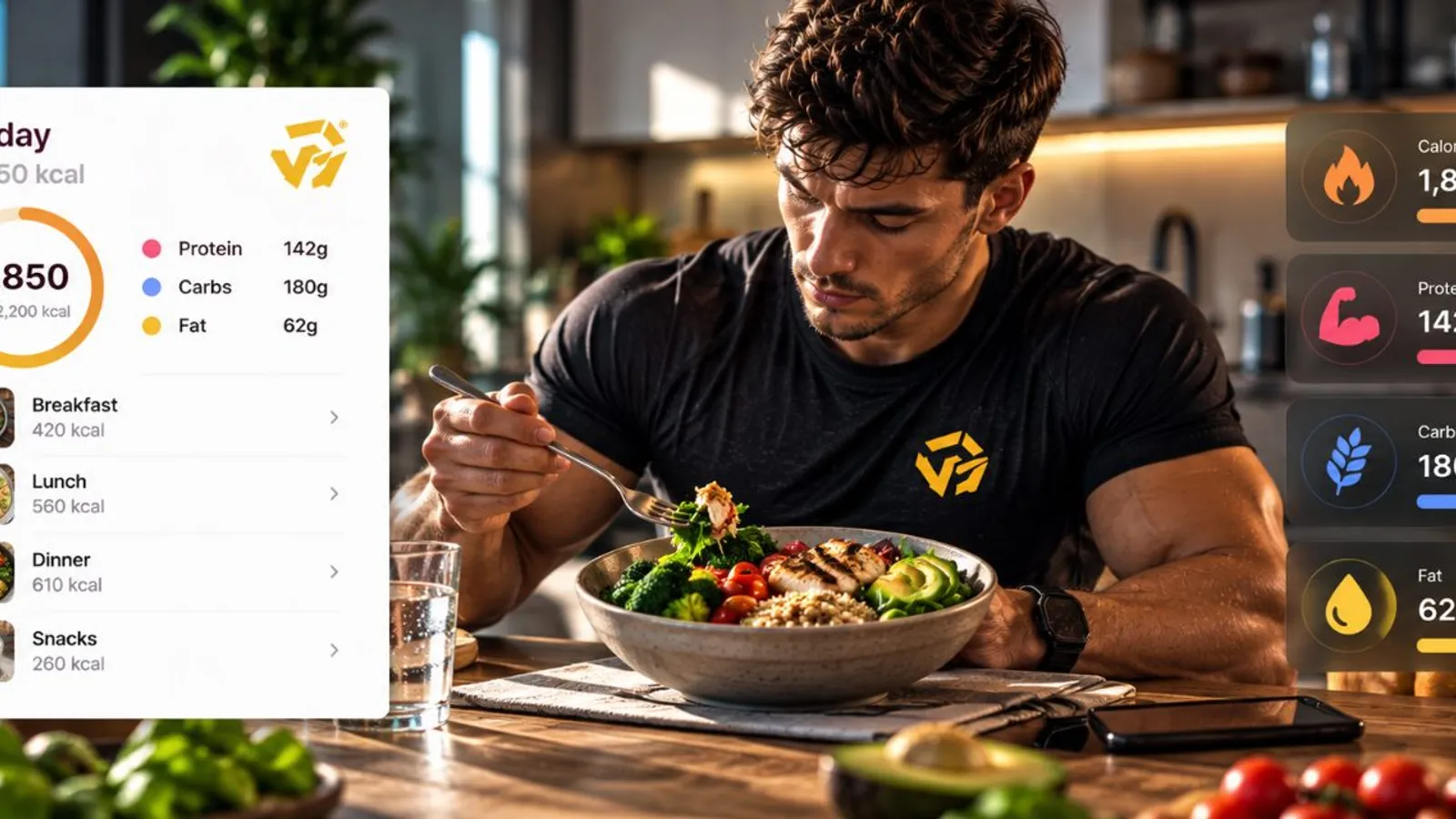
Trayner brings your training and nutrition into the same picture, so you can keep track of what you’re doing rather than guessing from one day to the next.