The Beginner's Guide to Gym Training: Your First 12 Weeks
New to the gym? This step-by-step guide covers how often to train, which exercises to learn first, how to progress safely and what to eat – everything you need for a confident first 12 weeks.
Walking into a gym for the first time can feel like arriving in a foreign country without a phrasebook. Everyone else seems to know what they are doing, the machines look like medieval torture devices and the free-weights area appears to be reserved for people who already have muscles.
Here is the good news: the fundamentals of getting stronger and fitter are simple. Follow the plan below for 12 weeks and you will build the habit, the technique and the confidence that most people never get around to.
Week 0: set yourself up properly
Before your first session, decide three things.
- How many days you can realistically train. For beginners, three full-body sessions a week is the sweet spot. Two is fine. Five is usually too many to recover from and too many to stick to.
- What you are training for. “Get stronger”, “build muscle” or “lose fat” all work. Pick one primary goal – your programme and your nutrition will be built around it.
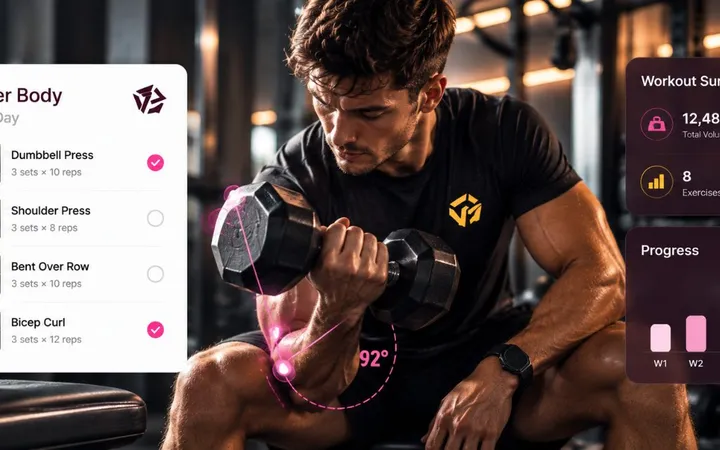
- How you will track your workouts. Progress in the gym comes from doing slightly more than last time, and you cannot do that if you do not remember what last time was. A notebook works; a workout tracker that pre-fills your last session works better.
Weeks 1–4: learn the movements
Your first month is about technique, not weight. Every session, practise the same six movement patterns:
| Pattern | Beginner exercise | Sets × reps |
|---|---|---|
| Squat | Goblet squat | 3 × 8–10 |
| Hinge | Romanian deadlift (dumbbell) | 3 × 8–10 |
| Push (horizontal) | Push-up or machine chest press | 3 × 8–12 |
| Pull (horizontal) | Seated cable row | 3 × 10–12 |
| Push (vertical) | Dumbbell shoulder press | 3 × 8–10 |
| Pull (vertical) | Lat pulldown | 3 × 10–12 |
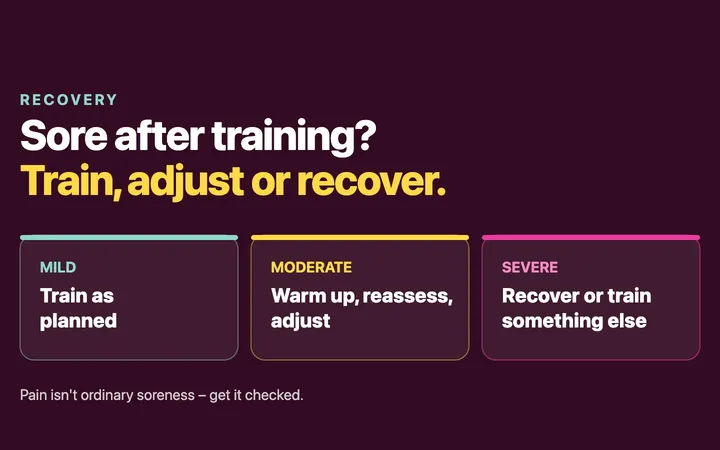
Rest 90 seconds to two minutes between sets. Finish every set feeling like you could have done two or three more reps – this is called leaving “reps in reserve” and it is the single best way to avoid injury while you learn.
Getting technique right without a coach
Most gyms will give you an induction, but very few beginners get ongoing feedback on their form. This is where most bad habits start: shallow squats, rounded backs on deadlifts, elbows flaring on presses.
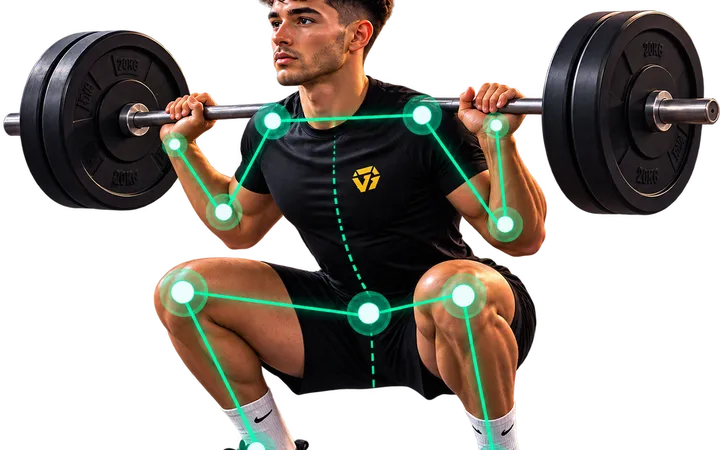
Filming yourself helps enormously. Prop your phone up side-on and compare what you see with a good tutorial. If you want that feedback in real time, Trayner’s AI form checker watches each rep through your phone camera and calls out depth, tempo and alignment issues as they happen.
Weeks 5–8: start adding weight
Once you can complete every set with good technique, apply the simplest progression there is: when you hit the top of the rep range on every set, add weight next session.
- Upper-body lifts: add 1–2.5 kg
- Lower-body lifts: add 2.5–5 kg
You will progress almost every session during this phase. Enjoy it – these “newbie gains” only come around once, and they are the reason consistency matters so much right now.
Around week six, swap the goblet squat for a barbell back squat and the dumbbell Romanian deadlift for a barbell version. Start with an empty bar and treat the first two sessions as technique practice.
Weeks 9–12: build the habit that lasts
By now the gym should feel familiar. This block is about consolidating.
- Introduce a deload. In week nine, drop your weights by roughly 30% for one week. You will feel fresher and progress faster in weeks ten to twelve. If you are tracking sleep and soreness, Trayner’s recovery insights can tell you when a deload is due rather than guessing.
- Add one or two accessory exercises you enjoy – curls, lateral raises, calf raises. Enjoyment is a training variable too.
- Review your log. Compare week one with week twelve. Most beginners who follow a plan like this add 20–40 kg to their squat and deadlift in their first three months.
What to eat when you start training
You do not need a complicated diet, but two things make an outsized difference:
- Protein. Aim for roughly 1.6–2.2 g per kilogram of bodyweight per day, spread across three or four meals.
- Enough total food. If your goal is muscle, eat slightly more than you burn. If it is fat loss, eat slightly less – but keep the protein high so you hold on to the muscle you are building.
If you would rather not do the maths, nutrition coaching in Trayner sets your targets from your goal and adjusts them on training and rest days automatically.
Common beginner mistakes to avoid
- Programme hopping. Changing your plan every fortnight because a new video looked exciting. Stick with one plan for at least 12 weeks.
- Skipping the warm-up. Five minutes of easy cardio plus two light sets of your first exercise is all you need.
- Training through sharp pain. Muscle burn is fine. Joint pain is not – reduce the weight or swap the exercise.
- Comparing yourself with others. The only comparison that matters is with your own log from last week.
Your next step
Twelve weeks from now you can be someone who trains – not someone who is thinking about it. Pick your three days, learn the six movements and write everything down.
If you want a programme built for you, live form feedback and tracking that takes seconds, download Trayner and start your first session today.